




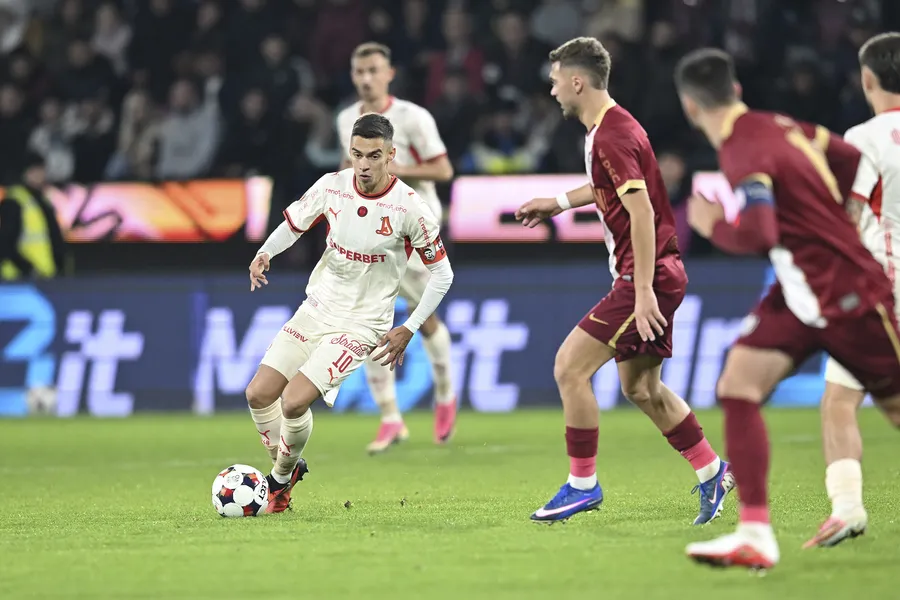
CFR led through Andrei Cordea and Cristian Ignat, but Cătălin Cîrjan and Dean Zandbergen struck in the 78th and 81st minutes.
How did CFR Cluj turn a two-goal advantage into only one point in the space of three minutes? The 2-2 draw with Dinamo on Sunday, 25 October 2026, was not simply a late comeback; it was a match in which control shifted gradually, then all at once.
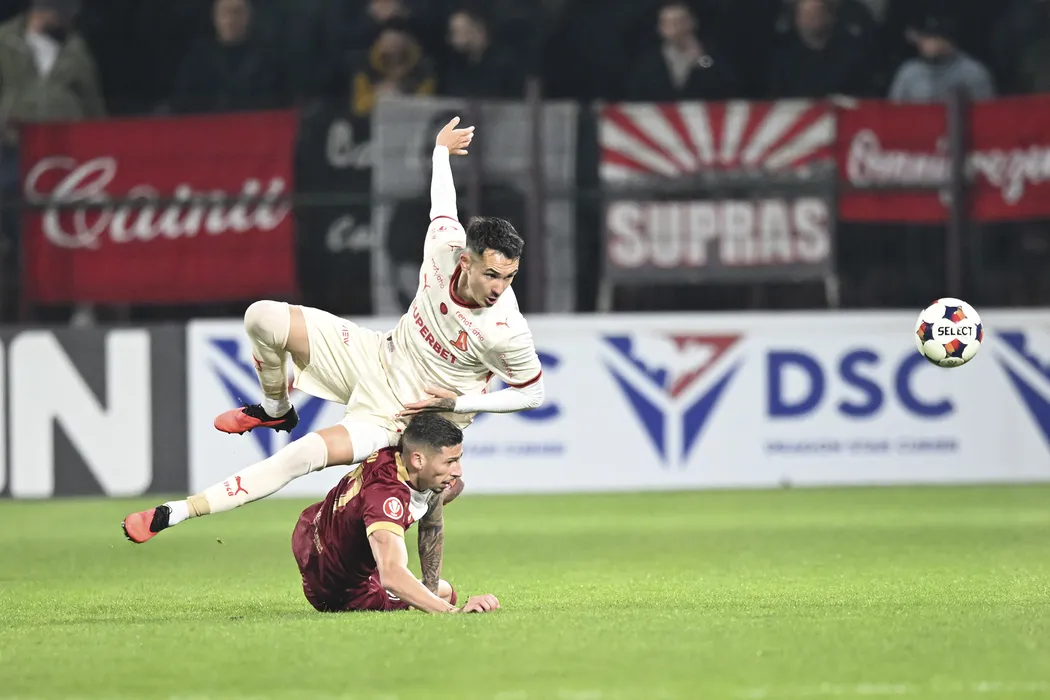
CFR were 2-0 up after 61 minutes through Andrei Cordea and Cristian Ignat, and the match appeared to be moving toward a result that would have carried weight beyond the evening itself. Instead, Dinamo, leaders of the SuperLiga after 13 rounds, left Gruia with a point that kept them on 30, while CFR remained ninth on 17.
The warning signs came before CFR scored
Dinamo’s recovery did not arrive from nowhere. The visitors had the first clear moments of the match: Armstrong’s shot from inside the area was turned away by Vâlceanu in the 10th minute, and Zandbergen’s header was held by the CFR goalkeeper nine minutes later.
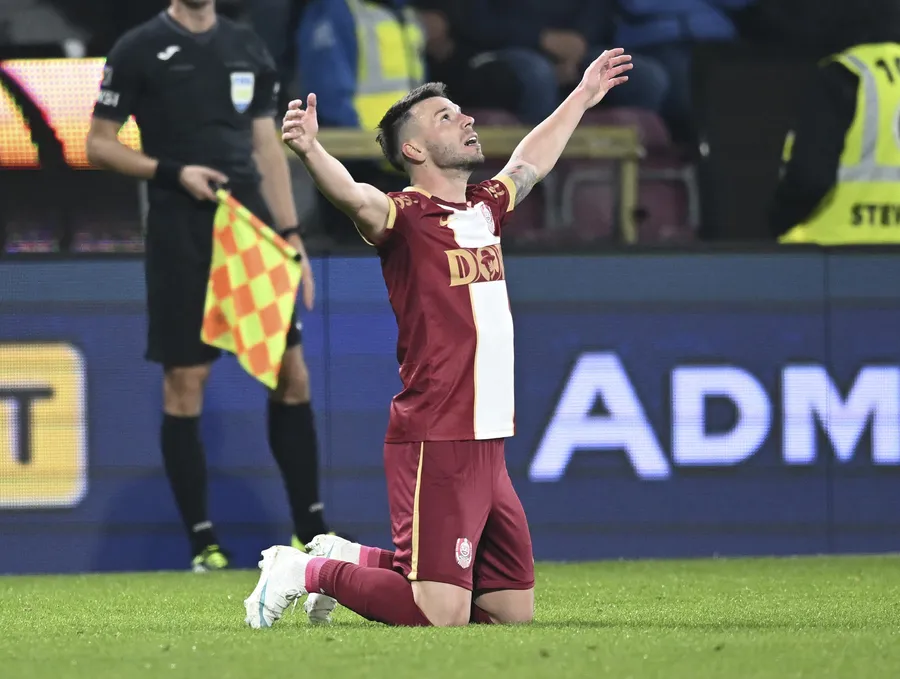
That opening mattered because CFR’s first goal, in the 27th minute, came against a passage in which Dinamo had been more visible around the penalty area. Cordea changed the direction of the half with a placed shot from outside the box, beating Bellaarouch and giving CFR a lead that was then almost doubled in the 33rd minute, when Ignat’s header struck the post.
The pattern was already clear enough: Dinamo had more of the early pressure, CFR had the sharper punishment. For a team lower in the table, that is often the most valuable route into a game against the leader, and for more than an hour it looked sustainable.
CFR’s second goal came in the 61st minute from a set piece, Omic’s corner finding Ignat for a header into the net. At 2-0, the home side had the scoreline, the momentum of the most recent goal and the match in a position where Dinamo needed not just pressure, but precision.
Three minutes that changed the match
The turn came late but not in stoppage time, which is part of why it will frustrate CFR. Dinamo reduced the deficit in the 78th minute, Cîrjan finishing inside the area after a corner, and equalised in the 81st, when Tarbă crossed for Zandbergen to score from close range.
Those two goals compressed the entire late-game collapse into a narrow window. CFR had spent more than 50 minutes ahead and 17 minutes with a two-goal cushion; once the first goal went in, the second followed before the match could settle into a new rhythm.
Andrei Cordea’s reaction after the game pointed to that same break in stability. He said CFR had been “a mature team until those four minutes” and added that Dinamo “had possession” but “did not cause us big problems” before the comeback. His most pointed line was about the nature of the concession: “We conceded from a set piece, I think it is the 10th like that or from a throw-in.”
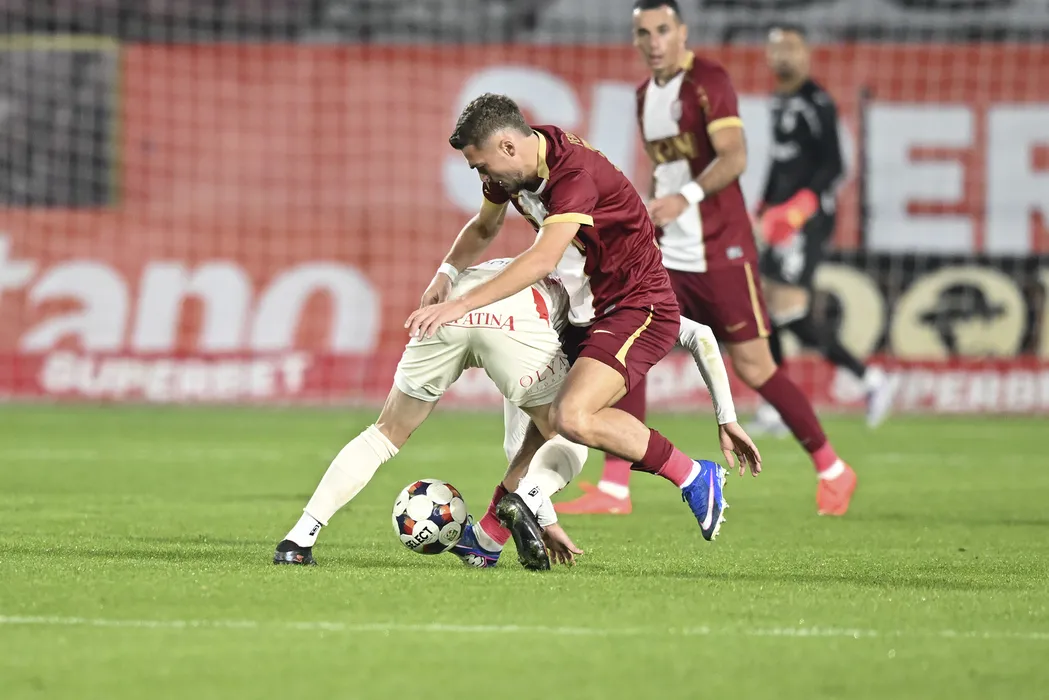
That is not a small detail in the reading of the match. CFR’s second goal came from a corner; Dinamo’s way back in also began from a corner. On a night when open-play domination did not automatically produce clear chances, restarts became the hinge of the result.
Dinamo’s bench gave the comeback a route
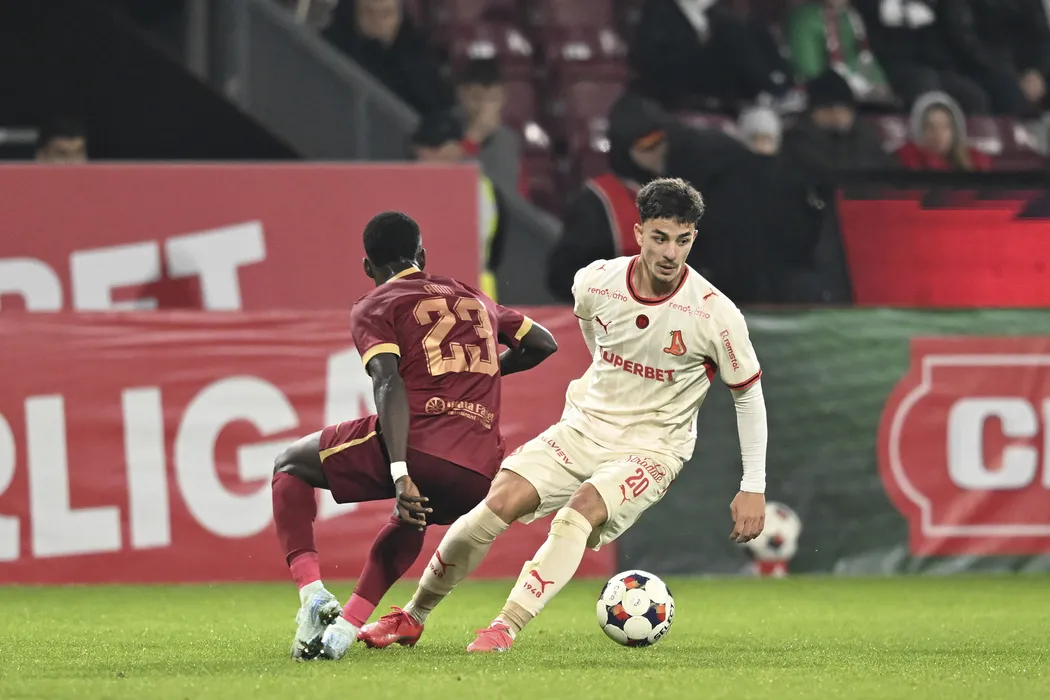
The substitutions also help explain how Dinamo kept their final-quarter push alive. Diogo Pinto came on in the 62nd minute, and in the 73rd Nuno Campos changed three players at once: Fetai, Irimia and Armstrong were replaced by Hintsa, Mazilu and Tarbă.
Tarbă’s role became decisive eight minutes later, with the cross that set up Zandbergen for 2-2. It was a narrow contribution in time, but a large one in effect: Dinamo’s bench did not merely refresh the team, it produced the action that completed the comeback.
Ciprian Marica, the former Dinamo striker, framed the visitors’ response less as a tactical correction than as a sign of resilience. His view was that Dinamo’s first half was below the level expected, but that the reaction after the break was the part that mattered most.
“Dinamo played poorly in the first half, but recovered in the second. And somehow they showed character. They believed in their chance. At 2-1, Cîrjan was calling the team to the centre so the match could restart and they could score the equaliser. And that is what happened. That shows the team has confidence and courage, and that even at 0-2 it does not give up.”
Ciprian Marica
That interpretation fits the sequence of the goals. Cîrjan did not celebrate the 78th-minute strike as an endpoint. The match state was immediately treated as unfinished, and within three minutes Dinamo had changed it again.
CFR’s frustration goes beyond the scoreline
For Marius Șumudică, the result was painful because it felt recoverable until the late swing. “At 2-0 you are not allowed to concede two goals and collapse,” the CFR head coach said, while also noting that Dinamo’s quality from the bench helped push the game back toward the visitors.
Șumudică also placed the draw inside a congested schedule, pointing to a Cup match against U Cluj at 21:30 on Wednesday, 28 October, followed by a trip to Petrolul on 31 October. That complaint does not erase the specific errors of the final quarter, but it does show why CFR viewed the lost lead as more than an isolated irritation.
The conclusion is therefore measured rather than dramatic. Dinamo did not dominate the scoreline for long, but they stayed close enough to exploit the one phase when CFR lost structure. CFR did enough for a win for much of the night, but not long enough to protect it.
For Dinamo, the point reinforces the habits of a leader: recover, use the bench, keep pushing after the first goal back. For CFR, the same match leaves a more uncomfortable lesson, because two goals of advantage disappeared not over a half, but in the brief spell when control matters most.


Journalist
James Michael Carter
James Michael Carter has written for the publication since 2013. He sets every result inside a wider trend — a season, a run, a trajectory — and stays careful with his wording. Sharp verdicts are not his register.

Most read today
- 1
- 2
- 3
Latest
- 16:11
- 16:08
- 15:35
- 15:31
- 15:29